Why Website Age Is Not Everything.
An older domain can be reassuring. It should never be the only reason you trust a website.
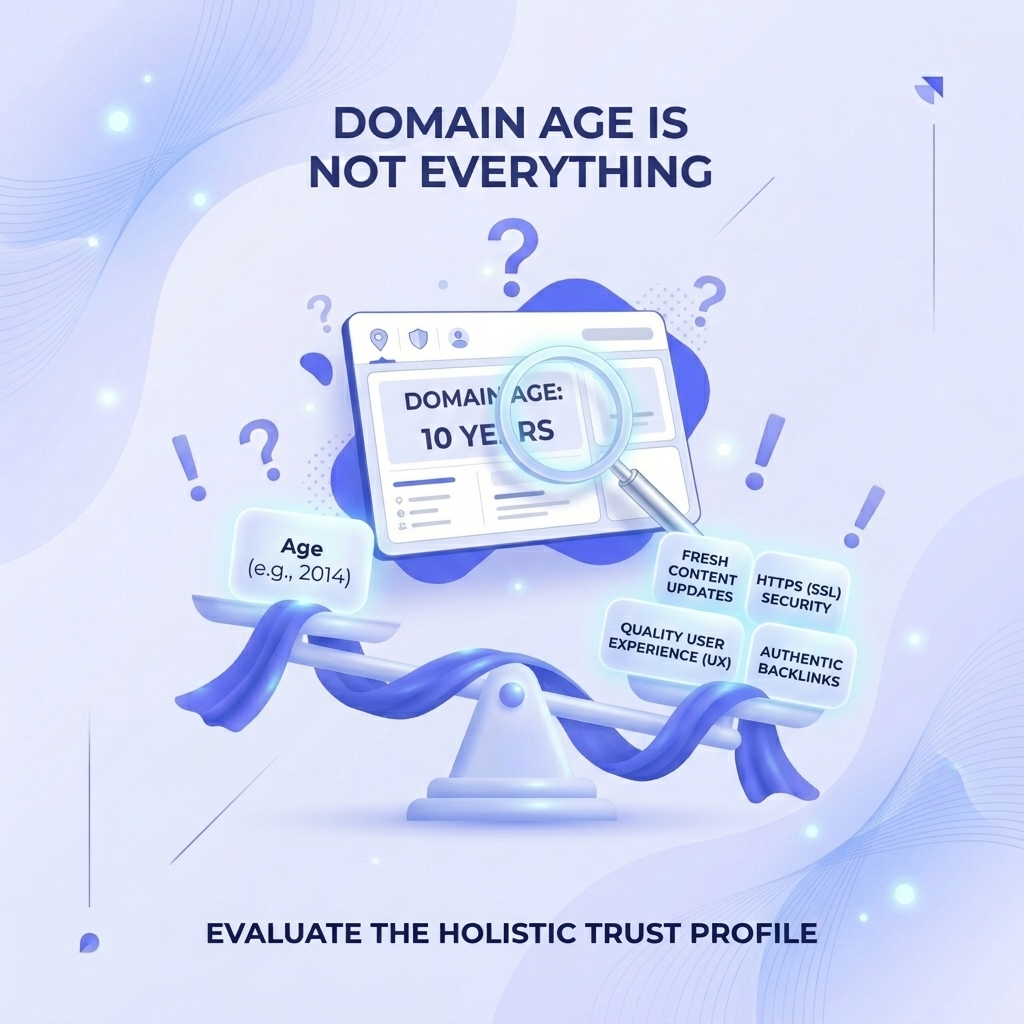
Domain age feels reassuring because older websites often have more history. But website age is one signal among many. It tells part of the story, not the whole story.
Open the app
Try the idea in VennURL.
Paste a URL into VennURL to inspect the destination, review redirects, check connection details, and understand what deserves attention before opening. VennURL is built around a simple principle: understand first, then act.
01
Age
A useful signal only when it is explained in context.
02
Ownership
A useful signal only when it is explained in context.
03
Context
A useful signal only when it is explained in context.
One Number That Gets More Credit Than It Deserves.
If you have used a website inspection tool, you may have seen a domain age value like eighteen years. It feels reassuring.
An old website often seems more trustworthy than one registered last week. Often, that is true. Not always.
What Is Website Age?
Website age, more accurately called domain age, is the amount of time since a domain name was first registered.
It does not tell you who owns the domain today, what has been hosted there, whether it is currently trustworthy, or whether it changed hands yesterday.
example.com

Registered:
March 2006

Domain Age:
20 years
Why Older Domains Often Feel Safer.
Building a legitimate business usually takes time. A company operating online for fifteen years has likely survived competition, built a customer base, maintained infrastructure, renewed its domain, and developed a public reputation.
That history can create confidence.
But Age Does Not Guarantee Trust.
A domain registered in 2008 may sound reassuring. But if the original company shut down, the domain expired, and someone else purchased it last month, the registration date alone can mislead.
The age remained. The trust did not necessarily transfer.
Domains Can Change Owners.
Domains are bought and sold regularly. Businesses rebrand, projects close, people forget to renew names, investors buy valuable domains, and someone else may take over.
That means domain age does not always reflect the current website.
- an old domain
- a brand-new owner
- completely different intentions
New Does Not Mean Dangerous.
Every trusted website was once brand new. Every startup, university, nonprofit, portfolio, and online store had a first day.
Age alone cannot tell you whether a website deserves trust.
Think About New Businesses.
A local bakery launching its first website today may have a domain age of three days. That does not make the bakery dishonest. It simply makes the website new.
Judging solely by age would unfairly penalize every new creator on the internet.
Domain Age

3 days
Think About Old Scams.
Someone could purchase an abandoned domain that has existed for fifteen years and begin hosting a phishing page yesterday. The age looks impressive, but the content tells a different story.
Domain Age

15 years
Context Matters More Than Age.
What does this age mean alongside everything else I know?
An older domain combined with valid HTTPS, healthy SSL, expected redirects, clear ownership, and consistent branding is often reassuring.
But age combined with suspicious redirects, copied branding, unusual login pages, or confusing domain names deserves closer attention.
Reputation Takes Time.
One thing domain age often indicates is opportunity. An older website has had more time to build reviews, documentation, search history, backlinks, references, and community discussion.
A website registered yesterday has less public history. That does not make it unsafe. It simply means less information is available.
Why Attackers Sometimes Prefer New Domains.
Many phishing campaigns use newly registered domains because they are inexpensive and disposable. If one domain is reported or blocked, another can be created.
Extremely young domains sometimes deserve additional scrutiny. Not because new equals dangerous, but because attackers often value speed over longevity.
Looking Beyond One Number.
Two websites can have the same domain age and inspire very different levels of confidence. The difference is not the number. It is the context around it.
Website A

Domain Age: 18 years
HTTPS: Valid
SSL: Valid
Redirects: None
Organization: Clearly identified
Verdict: No major warning signs found

Website B

Domain Age: 18 years
HTTPS: Valid
SSL: Valid
Redirects: Three
Organization: Unknown
Purpose: Unclear
Verdict: Several details deserve review
How VennURL Uses Domain Age.
VennURL includes domain age because it is useful, not because it is decisive. It becomes one part of a larger picture that may include HTTPS status, SSL certificate health, redirect behavior, destination transparency, metadata, Google Safe Browsing results, tracking parameters, and a plain-language website summary.
No single indicator carries the entire burden of trust.
Better Questions to Ask.
- Does the age match what I expected?
- Is the organization clearly identified?
- Does the destination make sense?
- Does the website behave normally?
- Are there unexpected redirects?
- Does anything else deserve attention?
Final Thought.
An older website has had more time to build a reputation. A newer website has had less time to earn one. Neither fact tells you everything you need to know.
The goal is not to judge websites by age. It is to understand them.
Understanding comes before action.
VennURL helps people review destinations, context, and warning signs before deciding what to do next.
Related reading
Keep building context with these VennURL notes.
June 20, 2026
Understanding redirect chains
The page you expect is not always the page you reach. Learn how redirects reveal the journey behind a click.
June 20, 2026
The difference between HTTPS and trust
HTTPS protects your connection. Trust depends on the context that helps you decide whether to connect in the first place.
June 20, 2026
What happens when you click a shortened link?
Shortened links are forwarding addresses. Learn how redirects, hidden destinations, and tracking shape what happens after the click.
Continue the Conversation
Follow VennURL for more thoughts on URL intelligence, web trust, and building a calmer internet.